
How Buy Now, Pay Later Affects Your Credit Score
Written by: Jacob S.
Published on:


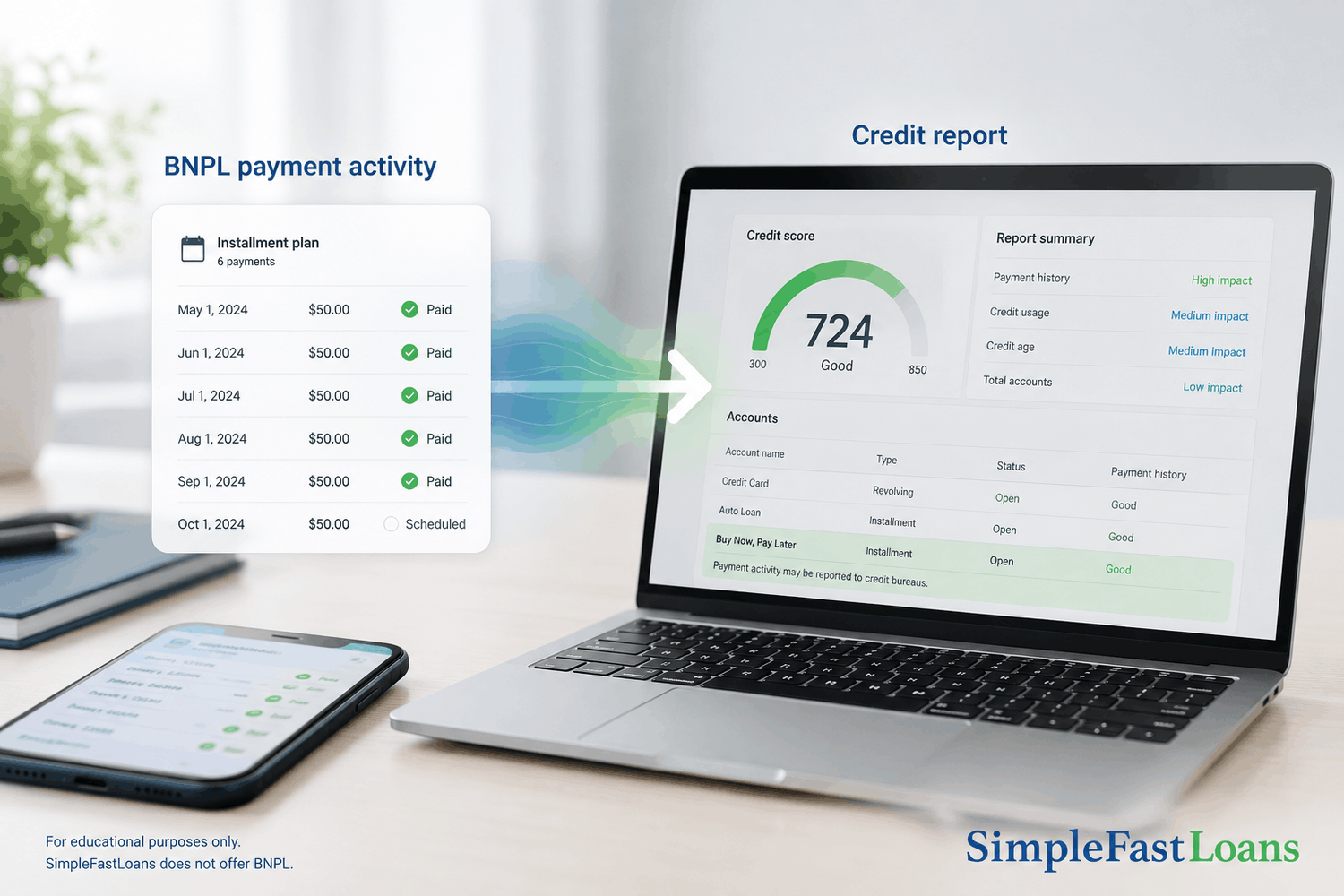
For most of its existence, buy now, pay later (BNPL) simply didn't show up on your credit report. You could pay off four installments right on schedule, and as far as your credit score was concerned, it never happened. That's finally starting to change, and the story is more encouraging than it might sound.
Here's what's actually shifting, what the data says about the real-world impact, and what it means if you're using buy now, pay later (BNPL) today.
Key Takeaways
- Applying for a buy now, pay later loan typically involves only a soft credit check, which doesn't affect your score.
- BNPL data is starting to reach the credit bureaus, but each bureau is handling it a little differently right now.
- FICO built new scoring models specifically for BNPL, and its own simulation found the score impact is modest for most people: 85% of users saw a change of fewer than 10 points.
- For people with a thin or new credit file, BNPL becoming visible could eventually work in their favor, not just against them.
- The one constant, regardless of how reporting evolves, is that paying on time still matters most.
Does BNPL Affect Your Credit Score?
Yes, but it depends on the provider, the credit bureau, and the credit scoring model being used. Most buy now, pay later applications only require a soft credit check, which doesn't affect your score. However, some providers now report payment activity to one or more credit bureaus, meaning on-time payments or missed payments may eventually influence your credit history depending on how they're reported and which scoring model a lender uses.
Does Applying for Buy Now, Pay Later Hurt Your Credit?
Most buy now, pay later providers approve you at checkout using a soft credit inquiry, the same kind of check used for pre-approved offers. Soft inquiries don't affect your credit score, so browsing or getting approved for a pay-in-four plan isn't something you need to worry about.
Longer-term BNPL plans for bigger purchases sometimes involve a more thorough hard credit check, so it's worth asking upfront if you're financing something larger than a typical checkout purchase.
Before choosing a plan, it is important to understand the broader risks of buy now pay later plans, including fees, overspending, and missed-payment consequences.
Why BNPL Has Been a Blind Spot Until Now
BNPL usage has grown fast. More than 53 million Americans, roughly 1 in 5 adults, used a BNPL loan in 2023, according to the CFPB's December 2025 market report. But for years, most of that borrowing simply wasn't reported to the three major credit bureaus. Industry researchers sometimes call this a "credit blind spot," since a growing form of borrowing wasn't part of the picture lenders could see.
That gap is beginning to close as some buy now, pay later providers start furnishing payment data to one or more credit bureaus. Reporting still varies by provider, bureau, and the credit scoring model being used.
Which Credit Bureaus Report Buy Now, Pay Later Loans?
Each of the three major bureaus is at a different point in this process:
- Equifax was actually the first bureau to build a formal system for BNPL reporting, back in 2021. According to Equifax's own explanation of how BNPL reporting works, the goal was to give consumers, especially those early in their credit journey, a way to demonstrate responsible repayment. Equifax also gives lenders the option to hold BNPL data out of existing scoring models while the industry adjusts.
- Experian picked up momentum starting in 2025. Affirm began reporting all of its pay-in-four and pay-over-time loans to Experian in April 2025, and Apple Pay Later became the first major provider to fully furnish its BNPL payment history to Experian, according to Experian's own newsroom coverage.
- TransUnion now receives Buy Now, Pay Later data from multiple lenders as well. Right now, that data sits in a separate section of your file. You can see it, but it doesn't yet factor into your TransUnion-based credit scores, according to TransUnion's guidance on BNPL and your credit.
None of the three bureaus handle this identically yet, and that's expected to keep evolving as more BNPL providers get on board.
| Credit Bureau | Receives Buy Now, Pay Later Data? | Does It Always Affect Credit Scores? | Notes |
|---|---|---|---|
| Equifax | Yes, from participating providers | Not always | Offers lenders flexibility in how BNPL data is used while reporting continues to evolve. |
| Experian | Yes, from participating providers | Depends on the scoring model used | Some major providers report payment history, but reporting still varies by lender. |
| TransUnion | Yes, from participating providers | Not currently in most TransUnion-based scores | BNPL data may appear separately on reports while scoring models continue to evolve. |
How FICO's Buy Now, Pay Later Credit Scores Work
The more interesting shift may be on the scoring side. FICO is the company behind the credit scores most lenders use. It spent years researching how to fold Buy Now, Pay Later into a score fairly, instead of just bolting BNPL data onto an older model. The result is two new scores: FICO Score 10 BNPL and FICO Score 10 T BNPL.
One design choice stands out. BNPL naturally involves several small loans at once, a pair of shoes here, a phone case there. So FICO built logic into the new scores that groups those small loans in its calculations. Each one isn't treated as its own separate red flag. The goal is to stop a handful of ordinary, small purchases from making someone look riskier than they really are.
FICO also ran a large-scale simulation before rolling this out, and the results are reassuring for most everyday users. According to FICO's own research on modernizing credit scoring for BNPL:
| Group | Simulated Score Change |
|---|---|
| Buy Now, Pay Later (BNPL) users overall | 85% saw a change of fewer than 10 points |
| Heavy users (5 or more BNPL accounts) | 97% saw a change of fewer than 20 points |
FICO also found that, on the whole, positive signals outweigh negative ones for borrowers who repay on time. In other words, the more common outcome in the simulation wasn't a dramatic swing in either direction. It was a small shift, and one that tends to tilt in favor of people who pay as agreed.
Since BNPL providers report inconsistently compared to traditional lenders, it helps to understand how credit bureau reporting timing works more broadly before assuming a BNPL payment will show up right away.
Can Buy Now, Pay Later Help You Build Credit?
This shift matters most for people with a thin credit file or no credit history at all. That's more common than most people realize. Millions of Americans fall into this group for reasons that have nothing to do with financial responsibility. They're young, they're new to using credit, or they've simply never needed a loan before.
For that group, Buy Now, Pay Later becoming visible is a potential opportunity. On-time BNPL payments, which previously vanished into thin air as far as your credit file was concerned, could eventually start building a track record the same way any other loan does. That's a meaningfully different story than the one that gets told about BNPL most often.
Related: More ways to improve your credit score
Can Missed Buy Now, Pay Later Payments Hurt Your Credit?
None of this changes the most basic rule of credit: paying on time helps, and not paying at all still hurts. If a Buy Now, Pay Later (BNPL) balance goes unpaid long enough to be sent to collections, that can land on your credit report and affect your score, the same as it would for any other unpaid debt. That was true before any of these reporting changes, and it's still true now.
The difference going forward is that consistent, on-time buy now, pay later payments may be reflected on your credit reports when reported by participating providers. Whether those payments affect your credit score depends on the bureau and the scoring model a lender uses.
Related: How to remove derogatory marks on your credit report
Checklist: How to Protect Your Credit While Using Buy Now, Pay Later
- Know which of your Buy Now, Pay Later providers report, and where. Reporting is still inconsistent across the industry, so it's worth checking with each provider directly.
- Treat due dates the same as you would for any other loan. Now that BNPL is starting to count, on-time payments are worth protecting the same way you'd protect payments on a credit card or personal loan.
- Keep an eye on your credit report as this rolls out. As more BNPL data reaches the bureaus, it's worth checking your report periodically to see what's actually showing up.
Alternative to BNPL for Predictable Repayment
If you're working on building a credit history and want a form of credit with a clearer, more established track record than BNPL currently offers, a fixed-payment installment loan is worth considering alongside it. Simple Fast Loans offers online installment loans with one predictable monthly payment, which can be a straightforward way to build a payment history you can point to.
Related Frequently Asked Questions (FAQs)
Here are questions people often ask about Buy Now, Pay Later (BNPL) and their credit score:
Does using buy now, pay later build credit?
It's starting to, for a growing number of providers, but reporting is still inconsistent across the industry. Whether your on-time BNPL payments currently help your score depends on which provider you used and which bureau it reports to.
Will checking my BNPL options hurt my credit score?
Usually not. Most BNPL approvals use a soft credit check, which doesn't affect your score. It's worth confirming this with the specific provider, especially for longer-term financing plans.
Why do FICO and VantageScore need a new score just for BNPL?
Because BNPL doesn't behave like traditional credit. It's common to have several small, short-term BNPL loans open at once, which older scoring models weren't built to interpret. The new FICO Score 10 BNPL models were designed specifically to account for that pattern.
Is it too late to benefit from BNPL reporting if I've already been using it?
No. As more providers begin reporting, future buy now, pay later activity is more likely to appear on your credit reports. Whether earlier payment history is reported depends on the provider's reporting practices, so don't assume past transactions will automatically be added.
