
What Happens When a Loan Payment Is Due on a Weekend?
Written by: Jacob S.
Published on:


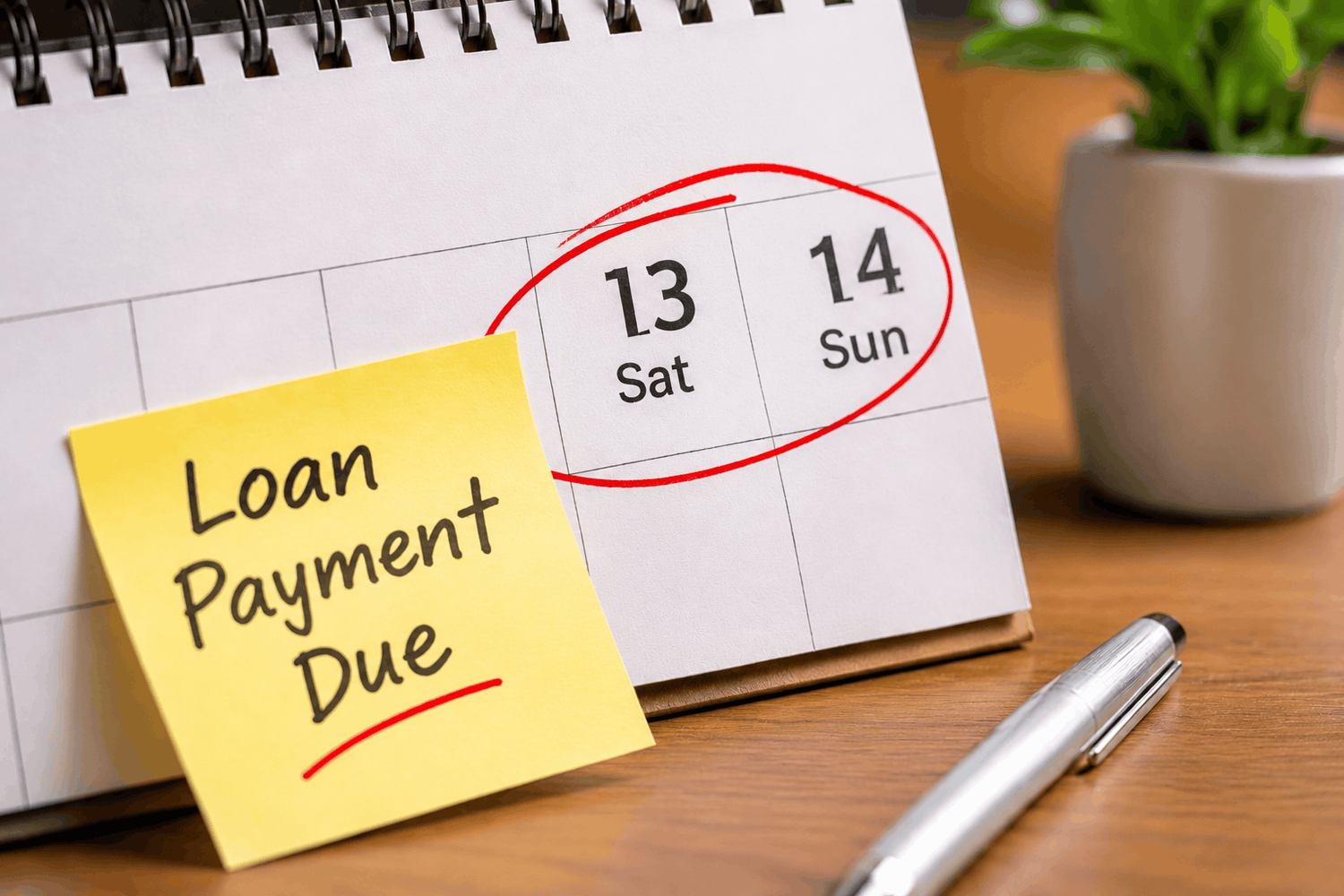
Your loan payment is due on Saturday. Or on Monday, a bank holiday. Do you need to pay early, or does the due date simply move? The answer depends on how your payment is processed and what your loan agreement says, and a small misunderstanding can turn into a late fee.
This guide explains what happens when a loan payment is due on a weekend or holiday, how different payment methods are handled, why the day you pay is not always the day your payment posts, and how to prepare so you are not caught off guard.
Key Takeaways
- ACH payments settle on banking days. They do not settle on weekends or federal holidays when the Federal Reserve's settlement services are closed.
- A weekend due date may move to the next banking day. ACH bill payments may be collected on the next banking day, but your loan agreement controls how the due date is treated.
- Payment date and posting date are different. The day you send a payment is not always the day your lender records it.
- A weekend payment can be late. If it is not credited by the applicable deadline and any grace period, your lender may treat it as late.
- Paying early can help avoid delays. Scheduling payments one to two banking days before the due date leaves more room for weekends, holidays, and processing times.
Are Loan Payments Processed on Weekends?
Usually not in the way you might expect. Many loan payments move through the ACH network, which Nacha, the organization that manages it, describes as processing payments throughout banking days. ACH payments settle only when the Federal Reserve's settlement services are open, so they do not settle on weekends or federal holidays.
In practice, this means a payment you schedule or submit on a Saturday or Sunday generally will not settle until the next banking day. Your bank or lender may show it as pending, scheduled, or received, but the money may not actually move until banks are open. This is an important distinction in how ACH banking works, especially when payment deadlines fall outside normal banking hours.
Other payment methods may work differently. Some lenders accept debit card payments on weekends, although the time a payment is recorded depends on the lender's policies.
What Happens When a Loan Payment Is Due on a Bank Holiday?
The Federal Reserve's holiday schedule includes New Year's Day, Martin Luther King Jr. Day, Washington's Birthday, Memorial Day, Juneteenth, Independence Day, Labor Day, Columbus Day, Veterans Day, Thanksgiving Day, and Christmas Day. On days when Federal Reserve settlement services are closed, ACH payments do not settle.
There is one wrinkle with weekends. When a holiday falls on a Saturday, Federal Reserve Banks generally stay open the preceding Friday. When a holiday falls on a Sunday, the Fed is closed the following Monday. Individual banks and lenders may follow their own holiday calendars, so a day that looks like a normal business day may not be one for your lender.
According to Nacha's ACH payment guidance, consumer bill payments due on a weekend or holiday are generally collected on the next banking day. That is how the money typically moves, but it does not automatically change the due date written in your agreement. Whether your payment is considered on time depends on the applicable terms and rules.
How Loan Payment Methods Compare on Weekends and Holidays
The way you pay changes how your payment behaves on a non-banking day. Here is a general guide. Always confirm the details with your lender.
| Payment method | Weekend or holiday behavior | What to know |
|---|---|---|
| Autopay (ACH debit) | Typically collected on the next banking day when the scheduled date falls on a weekend or holiday. | Keep enough money in your account through the next banking day and confirm how your lender handles the scheduled date. |
| One-time ACH payment | Submitted on a weekend or holiday, it generally settles no earlier than the next banking day. | Submit it before your lender's cutoff time and allow for processing. |
| Debit card payment | Many lenders accept card payments any day, but when the payment is recorded depends on the lender's cutoff and posting rules. | Check whether a weekend card payment is credited the day you pay or the next business day. |
| Bank bill pay | May be sent electronically or by check, which can add processing time. | Schedule it several business days ahead. |
Can a Weekend Loan Payment Be Considered Late?
Yes, it can be. Whether a payment is late depends on when the lender receives or credits it, compared with the due date and any grace period in your agreement.
Here is a simple example. Your payment is due Sunday. You pay by debit card on Sunday evening, but your lender credits payments on the next business day. Depending on your agreement, that payment could be treated as late even though you paid on time from your point of view. If your agreement gives you a few days of grace, you may have additional time before a late fee applies.
Some rules protect borrowers in specific situations. For example, federal rules for credit card payment deadlines give cardholders more time in certain situations when a due date falls on a weekend or holiday. Those rules do not automatically apply to installment loans, so check your own agreement and any applicable lending requirements.
A late payment can mean additional charges, and some lenders report seriously late payments to credit bureaus. The amount and timing of late payment fees depend on your agreement and applicable law. Reporting practices also vary, so check before assuming you have extra time.
Payment Date vs. Posting Date
These two terms look similar, but they mean different things:
- Payment date. The day you send or schedule the payment.
- Posting date. The day your lender records the payment on your account.
The gap between them can be one banking day or longer. A payment you make late on a Friday may not post until Monday. A payment made on a holiday may post the day after or later. That is why lenders often say a payment must be received by a certain time on the due date, and why waiting until the last minute carries risk.
Your posting date can also affect how interest and balances are calculated, depending on your lender. To see exactly how your payments are applied, check your payment history and your agreement. Keep in mind that a payment's posting date and the date it is credited for on-time payment purposes may not always be the same.
Related: Loan Payment Status: Pending, Processing, and Posted
How to Prepare for Upcoming Loan Payment Due Dates
A little preparation can make weekend and holiday payments easier to manage. Before your next due date:
- Pay a few days early. Aim for at least one to two banking days before the due date, especially when a weekend or holiday is nearby.
- Check the calendar. Look at your due dates for the next few months and note any that land on weekends or federal holidays.
- Use autopay carefully. Autopay helps you stay consistent, but keep a cushion in your account so a next-banking-day withdrawal does not overdraw it.
- Know your cutoff time. If your lender has a daily cutoff for payments, schedule payments before it.
- Confirm the payment. After you pay, check your account for a posted payment, not just a confirmation message.
- Save your confirmation. Keep a screenshot or email in case you ever need to show when you paid.
- Contact your lender early. If you think a payment might be late, reach out before the due date. Many lenders will talk through your options.
Paying ahead of time can reduce the risk of processing delays, but you should still confirm how your lender handles early payments. Some lenders apply additional amounts differently depending on the terms of the loan.
What to Check in Your Loan Agreement
Your loan repayment schedule shows when payments are expected, but your loan agreement explains how the lender handles due dates, processing, and late payments. Before your next payment, look for:
- The exact due date, and whether it moves when the date falls on a weekend or holiday.
- Any grace period before a payment is considered late.
- The payment cutoff time on the due date.
- Late fees, including the amount and when they apply.
- Accepted payment methods and whether any carry a fee.
- Autopay terms, including how to change or cancel a scheduled payment.
- How to confirm that a payment posted and where to see your payment history.
- Whether you can pay early and whether there is a prepayment penalty.
If anything is unclear, ask your lender to explain it in plain terms before the due date, not after.
Related Frequently Asked Questions (FAQs)
Here are other questions people often ask about loan payments due on weekends or holidays:
Are loan payments processed on weekends?
ACH payments settle only on banking days, so a payment submitted on a weekend generally will not settle until the next banking day. Some payment methods, like debit card payments, may be accepted on weekends, but your lender decides when they are recorded or credited.
What happens if my loan payment is due on a holiday?
For ACH payments, a consumer bill payment due on a federal holiday is generally collected on the next banking day. Check your agreement to see whether your due date also moves, or whether you are expected to pay on the last banking day before.
Can I be charged a late fee if I pay on a weekend?
Possibly. If your payment is not credited by the applicable deadline and any grace period, your lender may treat it as late. Paying early can reduce the risk of processing delays.
What is the difference between a payment date and a posting date?
The payment date is when you send or schedule your payment. The posting date is when your lender records it. They can be different days, particularly around weekends and holidays.
Should I pay early if my loan payment is due on a weekend?
Paying on the last banking day before the due date, or earlier, is generally a safer approach if your lender allows it. It gives your payment more time to process, although your agreement determines how payments are credited.
Can I change my loan payment due date?
Some lenders allow you to adjust your due date. Contact your lender to ask what options are available for your loan.
